

- cross-posted to:
- opensource@lemmy.ml
- cross-posted to:
- opensource@lemmy.ml
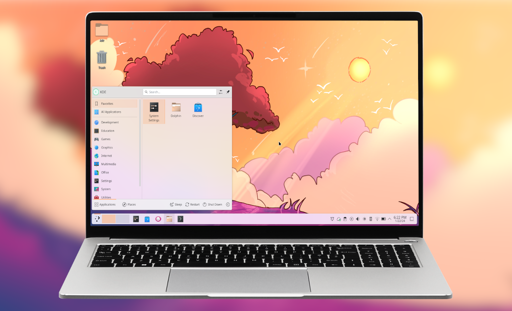
The investment will be used to strengthen the structural reliability and security of KDE’s core infrastructure, including Plasma, KDE Linux, and the frameworks underlying its communication services.
You must log in or # to comment.
As much as I love Valve, I am actually grateful that such a huge money income is not coming from a company. So there are no need to “please” them. This is very important to stay independent.
As a non-profit, KDE has no shareholders to serve, no quarterly earnings to grow. KDE charges nothing for its software or its licensing. There are no subscriptions, no spying on users, no disclosure or resale of data that users choose to voluntarily share with KDE, and no secret training of AI models with said data.
I want to focus on the part of shareholders here. This is extremely important in todays world, because shareholders dictate what to do and they don’t need to please them to grow for their survival (instead for the needs of the community and its users). So there are no short term decisions involved, its a long term community project for community.
I tend to agree that company backed projects go to shit after the shareholders get involved, but while there is nothing stopping Valve from doing an IPO in the future, they are currently a privately held company. This means they have no irrational share holders to appease. I surmize that this is the main reason why the Valve does nothing and wins meme exists because unlike most other corporations, Valve has the luxury of doing nothing.
Yes, that is from Valves perspective. But my argumentation was from KDE’s perspective. In my points above I talked about two issues, one about the shareholders of KDE and the other of Valve not funding the project. It is important to make the distinction. While Valve has no shareholders and if they would invest huge funds to KDE, this could create a huge dependency towards Valve, even if it is not formally. Something similar to a position of Firefox depending on the funds of Google in example.
I understand what you were saying now, when I read it before, it presented as one point(“please the share holders”) rather than your intended meaning.
it’s nice to see the sovereign tech fund continuing to support this effort rather than something like google.
Because it wasn’t obvious to me from the article, and I was trying to figure out whose sovereign tech fund it is:
The Sovereign Tech Agency is financed by the German Federal Ministry for Digital Transformation and Government Modernisation and is a subsidiary of SPRIND, the Federal Agency for Disruptive Innovation.
Thats 1,6 times the money that my uni wastes on zoom yearly!
(But no this is really cool)
I know its an american trope to measure things in ‘school busses’ or ‘empire state buildings’, but this is a really good arbitrary measurement!
TL; DR thanks, I hate it.
This is wonderful news
The Year of Linux KDesktop.
While this is great, aren’t wealth funds required to get a return on investment? How does that work here?
since it’s a state fund, return on investment isn’t necessarily just money back. more jobs means more tax payers. better reputation means stronger currency. less dependence on foreign actors means lower import costs.
Right, like what’s the ROI of a million computers switching from US-based for-profit Windows to Linux?
Funding open tools/tech/research is exactly the sort of thing that governments are best equipped to do, relative to private sector/individuals. Millions of dollars is a rounding error relative to government licensing costs to proprietary software alone, even ignoring the downstream benefits for the rest of the economy. And if we had lots of money in open software, it would attract a lot more talent to make it even better for the rest of us.
Who’s talking about wealth funds?
Sorry, my bad. So these people are software funding agencies?
With the Sovereign Tech Fund, we invest globally in the open software components that underpin Germany’s and Europe’s competitiveness and ability to innovate. By targeting core digital infrastructure, our investments scale across many sectors and benefit a broad range of users. Improving the security, stability, and reusability of open software components directly enhances the productivity, competitive edge, and capacity for innovation of startups and small and medium-sized businesses.
Oh it will finally have a chance catch up to Gnome?! ;P Great news, any money pumped into open source benefits all.
Why would you expect a cash injection to make KDE worse?
KDE is the only remaining “heavyweight” desktop environment that treats its users like adults
Im curious what makes you say this?
I switched to KDE a couple months ago after updating to ubuntu 25.10 and finding out gnome is forcing wayland going forward, but most of my daily used applications dont work on wayland at all. KDE will atleast still support X11 for another couple years.
I really wish I could go back to gnome as I just really don’t like how little KDE has thought about multi monitors with its bottom panels/task managers.
I’m not sure I follow your gripe about multi monitor handling. You can add completely independently customized toolbars and set up the task manager to show icons for windows just on that screen or on all screens.
I daily drove gnome for a few months, but it was back in like 2014. What features make it better for multi monitor setups?
That is my gripe haha. I don’t want independent bars, I have five monitors and every little change has to be done four more times and it’s infuriating lol. I want to be able to sync them like I can with dash to panel on gnome, but KDE handles it in such an odd way that it’s even hard to script cloning the task bar changes to other monitors.
The way gnome is built around extensions makes it very likely that if you have a pain point, someone smart enough to make an extension to fix it probably did too. I was able to make a very comfortable experience with it.
I also really miss ArcMenu :( I tried so many KDE menu themes and they are just so janky
Ohhhh okay, I suppose that’s fair enough lol. I hate having the same taskbars on every screen, so it makes sense that this behavior wouldn’t have really been noticed. I’m really surprised that there isn’t a way to mirror taskbar setups, til.
Yeah im originally a windows boy lol. I grew up with it, and now I just cannot stand not being able to see everything on all monitors. It’s one of the major reasons I haven’t been able to get used to virtual workspaces / virtual desktops. Something about a window being hidden off into the void until I switch over to it just doesn’t work for me
this right here is what drives me crazy about Kde. I prefer it over everything else, but the lack of a simple toggle button to make it so the same configuration goes on every monitor makes no sense to me, it /shouldn’t/ even be that difficult to implement as well, the existing framework already exists it’s just per monitor.
Once upon a time you could symlink the config to each other but idk if that still is feasible
Gnome has changed since 2014. Just for your information.
Lol I figured. I took it for a brief spin again about a year ago, but not long enough to form a super informed opinion about it. I was looking to discuss with the other guy, which is what happened. I appreciate your update.
Seriously speaking, while Linux has tremendous issues with user interfaces and experiences about them, I don’t believe Gnome is the worst here. In my opinion it’s rather the opposite. I don’t like KDE for its too much of everything, but otherwise it’s pretty good. And I can see myself using it. I guess to enjoy Gnome you have to use it at least long enough to actually get it. I can believe it’s not everyone’s cup of tea. But come on, most times I’m terrified by what these folks actually like. I use sway wm, but some kind of Xfce / Cinnamon and alike are just in some ‘Windows 3.1 nostalgia’ department in my book.
i would also like to know what you mean. i daily both gnome and kde, gnome is by far the worse performer when it comes to multi monitor stuff. it’s more of a power user tablet interface, with great gesture and multitouch support. kde meanwhile just lets you put anything anywhere.
My issue is when editing a panel there is no way to sync that change to all your other panels. I have five monitors and any new change (pin new app, hide something from tray, appearance change, trying new menu theme) needs to be manually done to every other panel too. It’s alot of effort when you don’t even know if you like the change yet.
is the “clone panel” button in panel settings not enough? gnome doesn’t even allow miltiple panels.
It does certainly help, just not great.
And yes gnome does, because it is built around an extension ecosystem. You can’t multi monitor their default dash, but you certainly can use the dash to panel extension just fine on multiple monitors. Due to extensions, gnome is just way more customizable
starting with kde 6.8 they will drop x11 support entirely: https://itsfoss.com/news/kde-plasma-to-drop-x11-support/
Yeah that is still a while away though. Gnome is pushing it now
It’s really not an option for me until wayland can do headless screens for RDP access. :(
deleted by creator
I lol’d.
Fair enough, fair enough. So I’ll just wait for the kNome desktop.
catch up?? surely you jest
I do, hoped its obvious, but apparently people still treat these wars seriously. Don’t get me wrong, I’m seriously committed to gnome, but I’ve no problem with KDE, some of my best friends are KDE users! And I am genuinly happy there’s funding going its way.