China has billionaires because it has private property, and it has private property as a concession to help speed up and smooth out development, keep it tightly interconnected on the global stage, and for technology transfer. Socialism is not “0 billionaires,” it’s a transitional mode of production that carries characteristics of the former mode of production and the new. Public ownership is the principal aspect of China’s economy, and the working classes control the state, ergo it is socialist.
It’s the only reply someone can make to such a comment, friend. You suggest that there’s only one opinion on that matter and that everyone who doesn’t accept it isn’t well-read enough. To go any lower you’d have to use swear words.
If China had no billionaires, you’d be saying “how can it be socialist if it has millionaires!” If it had no millionaires you’d complain about people having thousands of dollars.
The PRC is a mixed economy, with the state-planned, socialist sector commanding the heights of the economy, and a smaller sector for capitalist development.
Sorry, but this amount of links in one post is kind of flooding the zone with shit. You can’t expect someone to go through them all, analyze them and prepare a response. That would take a week. Since many of those links are reddit disussions and youtube links, I’m inclined to say that you posted filler links to shut up any discussion. At least one news link is even paywalled. Whatever I answer now, you can say I haven’t read all of your links.
Some links are Chinese domestic opinions, which don’t really help - we all already know that China sees itself as socialist. And the majority of the news articles don’t point out that China is socialist. They only show that China isn’t a free market economy. Sentencing private businessmen to death for transgression, for example is not a trait of socialism. Having party members in your private multinational companies doesn’t make them owned by the people. Why does the country have private businessmen owning large companies at all? China has domestic billionaires. Billionaires that have grown fat on the backs of their workers. This is not socialism.
Some links are Chinese domestic opinions, which don’t really help - we all already know that China sees itself as socialist.
Chinese people’s analysis, views and opinions on our country its guiding ideology and political system are irrelevant in your eyes? This stinks of western chauvinism. Is it only real socialism when white people agree it is?
China has domestic billionaires. Billionaires that have grown fat on the backs of their workers. This is not socialism.
Please define socialism. If a workers state lead by a vanguard party managing the transition out of capitalism and defending revolutionary gains isn’t socialism because contradictions remain then I venture to say no state will ever be socialist.
Chinese people’s analysis, views and opinions on our country its guiding ideology and political system are irrelevant in your eyes? This stinks of western chauvinism. Is it only real socialism when white people agree it is?
It is a bit early for playing the racism card, isn’t it? No, it doesn not matter at this point because it’s self-labeling. The Chinese people have a right to label themselves however they want.
Please define socialism. If a workers state lead by a vanguard party managing the transition out of capitalism and defending revolutionary gains isn’t socialism because contradictions remain then I venture to say no state will ever be socialist.
The most simple definition. A socialist state is one where the workers own the means of production.
Let’s try your own definition:
Workes state - China is not led by workers. It has a class system and workers do not own the means of production. It is mainly owned by individuals - those are capitalists.
Vanguard party - this is not something a socialist society should have, but merely a perversion that every state trying to be socialist developed. Parties are for democracies, a socialist state does not need parties.
managing the transition out of capitalism - it cannot be called transitioning out of capitalism when some individuals gain unimaginable wealth while others don’t. This is a concentration of wealth and exactly the same is happening in “capitalist” countries. China is transitioning out of socialism.
It is not “playing the racism card” to point out racism when it appears. You treated Chinese people’s own analysis of our country, revolution, party, state, and social formation as irrelevant unless it is validated by your approved sources, which in practice most likely means Western, liberal, Trotskyite, anarchist, NGO-adjacent, or white academic sources. That is chauvinism. Disliking the word does not change the content.
Your definition of socialism as “a state where workers own the means of production” is not a definition. It is a slogan. What does “workers own” mean concretely?
Does every worker become a petty bourgeois small proprietor? Does every enterprise become a cooperative competing in the market? Does ownership mean legal title, political power, control over investment, planning authority, abolition of capital as the commanding social force, public ownership of the strategic sectors, or the dictatorship of the proletariat? You have not specified any of this. You have taken a phrase, emptied it of historical content, and analytical value and used it as a purity test against real revolutions.
A serious definition must begin from transition. Socialism is not communism. It is not classlessness, statelessness, or the immediate disappearance of contradiction, commodity forms, inequality, bourgeois right, or inherited backwardness. Socialism is the transitional form in which the proletariat holds political power, public ownership is primary, the commanding heights are controlled by the state, planning stands above capital accumulation, and remaining capitalist elements are subordinated to the strategic direction of the workers’ state. It exists under pressure from the capitalist world system, sanctions, military encirclement, technological dependence, uneven development, and contradictions inherited from the old society.
That is why socialism has contradictions. If those contradictions had vanished, it would no longer be socialism. It would be communism.
Your claim that China is “not led by workers” is asserted, not demonstrated. China is not a liberal parliamentary market where parties compete for donors, media access, and bourgeois legitimacy. It has people’s congresses, mass organisations, party leadership, consultation, supervision, cadre evaluation, local elections, and planning. The roughly three million deputies to people’s congresses are overwhelmingly drawn from workers, peasants, technicians, professionals, cadres, soldiers, ethnic minorities, and other strata of the working class. Around two and a half million of those are directly elected at county and township levels.
You may reject it because it does not resemble your idealist puritan utopian notions of how “it should be”, but that only exposes the poverty of your framework. On which class rules, which class commands the state, which class directs development, and which interests discipline capital, China is not ambiguous it is the working class wielding the state in their interest.
Your statement that China’s means of production are “mainly owned by individuals” is simply false. Land is publicly owned. Finance, Energy, telecommunications, transport, heavy industry, strategic infrastructure, defence, banking, and the decisive commanding heights are publicly owned or state controlled. Even outside the core state sectors, the firms with serious macroeconomic weight are disproportionately public or under decisive public discipline. Private capital exists, but it is secondary. It does not command the state. It operates within limits set by the socialist state and can be cut down when it exceeds them. This is the decisive distinction: under capitalism, finance disciplines the state. In China, the state disciplines finance.
That is why Jack Ma and Ant Group were checked when they attempted to push China toward capitalist financialisation, consumer debt expansion, and parasitic fintech power. In a capitalist state, that sort of figure is protected, celebrated, and integrated into policy (just look at the capitalist nations reaction to the incident). In China, he was reminded that capital does not rule the republic. That example alone tells you more than a hundred abstract slogans about “worker ownership.” (not to mind how it’s far from an isolated example)
Your dismissal of the vanguard party as a “perversion” is pure idealism. Class consciousness does not magically arise from suffering. A revolutionary programme does not spontaneously appear because exploitation exists. The working class is fragmented by region, skill, nationality, gender, wages, imperialist bribery, religion, media, trade-union economism, and every ideological weapon the bourgeoisie possesses. Without organisation, theory, discipline, continuity, and a party capable of concentrating the advanced experience of the class, the working class remains trapped in defensive struggle.
A vanguard party is not a bourgeois party with red flags. It is not a club competing in a marketplace of opinions. It is the organised political form through which the most conscious elements of the working class and oppressed masses lead the struggle for state power, defend the revolution, suppress counter-revolution, coordinate development, and prevent the bourgeoisie from restoring its dictatorship.
Every successful socialist revolution required such an instrument. Russia required it. China required it. Vietnam required it. Cuba required it. Korea required it. This was not an accidental deformation. It was the organisational answer to class struggle under real historical conditions. You have no real alternative only fantasy. Eight billion people do not spontaneously become revolutionary strategists. Workers scattered across global supply chains do not spontaneously defeat imperialism. A peasantry emerging from semi-feudal relations does not spontaneously build socialist industry. A revolution without a leading political centre is not “more democratic” or “more pure”. It is merely easier to destroy.
Your idea that “parties are for democracies” is equally confused. Bourgeois parties administer capitalist dictatorship behind a pluralist curtain. A communist party in a socialist state has a different function: securing proletarian leadership, maintaining revolutionary continuity, disciplining capital, and coordinating the transition. Socialism needs mass participation, supervision, criticism, rectification, planning, local election, cadre accountability, and organised proletarian leadership.
On wealth concentration: yes, China has billionaires. Yes, this is a contradiction. No, the existence of contradictions does not automatically make a society capitalist. Again, socialism is a transition. The question is whether capital is sovereign or subordinated. Does private wealth command the army, land, banks, party, courts, planning system, currency, and state? In China, it does not.
Chinese billionaires are not sacred political subjects. They are regularly investigated, disciplined, removed from public life, or have entire business models destroyed when they threaten social stability and state direction. Under capitalism, billionaires buy media, elections, legislation, housing, universities, infrastructure, and foreign policy. Treating these systems as identical because both contain wealthy individuals is simply surface-level moralism with academic pretensions.
The claim that China is “transitioning out of socialism” is especially absurd. A country transitioning out of socialism does not keep land publicly owned, strengthen state planning, discipline finance capital, expand public infrastructure at historic scale, eliminate extreme poverty, build world-leading public transport for a financial loss, expand party cells in private firms, centralise strategic industries, subordinate billionaires to political authority, and maintain communist party leadership over the army and state.
That is not a transition out of socialism. It is a socialist state using markets, capital, and uneven development as instruments within a broader strategy of national development, proletarian state power, and long-term transition.
You are confusing markets with the rule of capital. You are confusing private firms with capitalist state power. You are confusing inequality with capitalism as such. You are confusing socialism with the immediate abolition of every inherited contradiction. Above all, you are confusing an abstract moral image of socialism with the actual historical process of revolution, construction, retreat, correction, struggle, and development.
This is not a serious critique of China. It is a critique of a China that exists mostly in your head.
Socialism is not proven by aesthetic purity. It is judged by the class character of the state, ownership and control of the commanding heights, the subordination of capital to political power, the direction of development, and the organised capacity of the masses to exercise power through institutions built by their own revolution.
By those standards, China is not “capitalist because billionaires exist.” It is a socialist society with serious contradictions, operating inside a capitalist world economy, using controlled capitalist mechanisms under the leadership of a communist party and a workers’ state.
What you describe is why China is a successful and wealthy nation. Not really why it should still be considered socialist. I do not know whether the concessions China made to capitalism where necessary, but they sure were successful in raising the standard of living. However, if they were necessary it means that China wasn’t able to establish socialism in the end. And this is not a critique against the Chinese people. As you say: the world is capitalist. It may just be impossible to establish socialism under the current conditions, whithout a world revolution. That total isolation doesn’t work very can be considered proven by now.
Claiming that I suggested that China is capitalist is also a pretty big straw man. China has a socialist and a capitalist sector. That doesn’t make the country capitalist, but it has lost the basic principles that make socialism: The workers don’t own the means of production in the capitalist sector. You try to talk this away by changing the very definition of socialism.
No matter how well-controlled this sector is, the a large part of the surplus those workers achieve goes into the pockets of capitalists. Even if those workers are as well-paid and well-protected as their counterparts in the socialist sector, the are still alienated from their work. Some of the fruits of their work are funding some rich man’s mega yacht and the betterment of the socialist state. By this, you create two classes of workers - that means giving up on working towards a classless society.
You may say this is a temporary setup raise the standard of living, but concentrated money always creates power and corruption. Enough money will always find some weak-willed individuals to buy power, no matter how draconic the punishment might be. The fact that billionaires have to be put to death shows that this is already happening on a grand scale. There are only two ways this can go, in my opinion: Either China will decide to reintegrate the capitalist sector back into the socialist society or this sector will quickly erode what remains of the socialist society. At this point, the first will not go through without bloodshed.
To me, the question stands whether a country can use “controlled capitalist mechnisms” at all and still stay socialists. Controlled capitalism isn’t socialism. This could be discussed. However, once you allow privately owned international businesses on a grand scale, it is really hard to argue for your position.
I already explained why China should be considered socialist: not because it is merely successful or wealthy, but because socialism is a transitional process full of contradiction, and the decisive question is which class holds political power. In China it is unambiguously the working class who hold the state, command the commanding heights, discipline capital, direct development, and subordinate private accumulation to national and social objectives.
You are also conflating socialism with communism. Communism requires the global abolition of capitalism. Socialism does not. Socialism can exist, has existed, and does exist under capitalist encirclement: the USSR, China, Cuba, Vietnam, the DPRK. It cannot complete itself globally in one country, but the proletariat can seize and wield state power, build public ownership, suppress bourgeois political power, develop the productive forces, and carry out transition under hostile world conditions.
Your claim that capitalist concessions mean socialism was not established is not Marxism. As Lenin put it state capitalism under the dictatorship of the proletariat is not the same social relation as capitalism under bourgeois rule. The same economic form has different class content depending on which class commands the state. State capitalism under bourgeois rule strengthens the bourgeoisie. State capitalism under proletarian rule serves socialist construction.
So the serious question is not whether capitalist mechanisms exist. They obviously do. The question is whether they are sovereign. Do they command the party, state, army, land, finance, planning, courts, banks, currency, or national development strategy? In China, no. They do not.
You say I straw-manned you, but you explicitly said China was “transitioning out of socialism.” You now soften this into “China has a socialist sector and a capitalist sector,” then again treat the existence of the capitalist sector as proof that socialism’s basic principle has been lost. That is the same argument with padding.
A socialist transition is not defined by the absence of capitalist relations. It is defined by proletarian political supremacy and the subordination of capitalist relations to socialist development. If private property automatically means socialism has failed, then the NEP, New Democracy, Cuba, Vietnam, and every real revolutionary state operating under scarcity, siege, and uneven development vanish from socialist history. Your definition does not clarify socialism. It abolishes it.
Yes, workers in the private sector do not legally own those firms. That is a contradiction. I have never denied this. But you leap from “contradictions remain” to “therefore class struggle has been abandoned.” That is simply unserious to put it lightly. Class struggle has not been abandoned in China. Since around 2014, the birdcage has been tightening: finance restrained, platform capital checked, real estate capital forced into correction, anti-corruption intensified, party cells expanded in private firms, and strategic sectors reasserted under state direction. This is not capital digesting the socialist state. It is the socialist state reasserting command over capital.
Your treatment of corruption is equally crude. The existence of corruption does not prove degeneration. The toleration of corruption, or the inability to discipline it, would. Rooting it out from top to bottom, including at high levels, proves the opposite.
You also conflate financial assets with social power. Money is not power in itself. It is a token of command over labour, resources, and territory, mediated by law and the state. In a bourgeois state, money becomes political power because the bourgeoisie controls the institutions through which money commands society. In China, wealth does not automatically become sovereignty because the bourgeoisie does not own the state. The capitalist may have money; the state decides whether that money becomes command or becomes a liability.
This is why Chinese billionaires are not equivalent to Western billionaires. In the West, they buy elections, media, parties, universities, housing, legislation, think tanks, and foreign policy. In China, they have no pathways to purchasing meaningful power or influence. That is the difference between capital ruling the state and capital being subordinated by the state.
You say “controlled capitalism isn’t socialism.” Again, capitalist mechanisms controlled by a bourgeois state are capitalism. Capitalist mechanisms subordinated to a proletarian state are part of socialist transition.
This is the point of Chinese socialist political economy’s distinction between private capital and public capital. The argument is not that capital relations are harmless. The argument is that in the primary stage of socialism, market relations and capital cannot simply be wished away. The question is whether capital is privately sovereign or publicly commanded. Public capital in the commanding heights compels accumulation for social development rather than private domination.
You also misdescribe China’s relation to international business. China did not simply “allow privately owned international business on a large scale” in the liberal sense. It used foreign capital, technology, export markets, and capitalist greed for national development goals under conditions set by the Chinese state. Foreign capital wanted profit and market access. China extracted infrastructure, technology transfer, industrial capacity, employment, training, supply chains, and productive upgrading.
As Lenin put it, the capitalists will sell us the rope with which they will be hanged. Capital can and should be used against itself when operating under hostile class power.
You see private firms and conclude surrender. You see foreign capital and conclude dependence. You see billionaires and conclude bourgeois rule. But none of these categories can be understood apart from the state power containing them. In China, large capital does not dictate the national project. It is used, restricted, disciplined, and punished when it threatens the whole.
Yes, there is danger. If capital gained political command, if public ownership ceased to dominate the commanding heights, if finance disciplined the state, if the party became the administrative committee of the bourgeoisie, then China would be moving out of socialism. But that is not the present reality nor the present trend. The trend is a tightening birdcage, stronger state direction, common prosperity, anti-corruption, strategic self-reliance, party leadership over private firms, and discipline of capital.
Your argument is not grounded in China’s present conditions or trajectory, but in an abstract fear that because capital exists, capital must inevitably rule. That is not materialism. It is fatalism.
China remains socialist not because it is pure, but because the working class holds state power, public ownership controls the commanding heights, land and finance remain under state authority, planning governs accumulation, capital is subordinated to national development, and the bourgeoisie are still disciplined by the state.
Why does the country have private businessmen owning large companies at all? China has domestic billionaires. Billionaires that have grown fat on the backs of their workers. This is not socialism.
You’re right, you didn’t read even a few of the links, and you’re proving the post correct.
You’re right, you didn’t read even a few of the links, and you’re proving the post correct.
I just wrote:
Whatever I answer now, you can say I haven’t read all of your links.
You obviously didn’t look at even a few of these links either! These links include pages and pages of discussions in several formus, inclunding reddit. There are several hours of youtube videos. There’s paywalled content! There are sites flagged by my virus protection. This not sharing information, this flooding. This is a way of shutting up any kind of disussion.
You obviously didn’t look at even a few of these links either!
The fact that they get memory-holed or paywalled after a few years isn’t my fault, but I’d be happy to update any ones that aren’t working with archived links.
This not sharing information, this flooding. This is a way of shutting up any kind of disussion.
Just silly. For one person its “too much info”, for another its “not enough”. AI really broke people’s brains. If they actually have to read some things and can’t be given a short summary, they call it “shutting down discussion”.
Just silly. For one person its “too much info”, for another its “not enough”. AI really broke people’s brains. If they actually have to read some things and can’t be given a short summary, they call it “shutting down discussion”.
I would accept this argument if you’d sent me one or two links to well-researched sources that were just very long. But you didn’t do that. What you provided is a mess. Most of the links I read through do not even provide any information about whether or not China can be called socialist. For example the news items about China executing businessmen. Others even contradict the argument of China being a socialist country.
Take this link
https://www.reddit.com/r/communism101/comments/91liw2/comment/e2z3kzu/
It basically says that the Chinese economy is 50% socialist at maximum. This would support my opinion that China is actually transitioning away from socialism by its growing private sector. Having basic workers’ rights does not help this. Some capitalist countries have those too.
So face it: It’s not me being unable to process information. It’s you being unable to provide relevant information. You obviously can’t see the difference between what’s relevant for your argumentation and what is not. And expect others to sort it out.
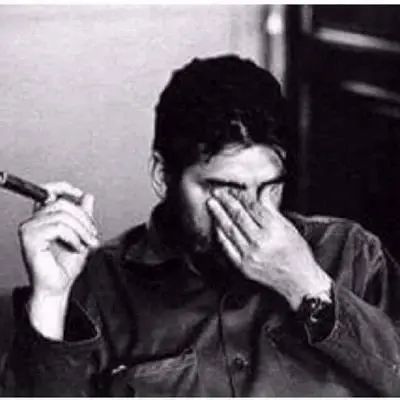


The joke here is calling China “socialist”, right?
Edit: Be honest. How can you call a country socialist if it has billionaires?
China has billionaires because it has private property, and it has private property as a concession to help speed up and smooth out development, keep it tightly interconnected on the global stage, and for technology transfer. Socialism is not “0 billionaires,” it’s a transitional mode of production that carries characteristics of the former mode of production and the new. Public ownership is the principal aspect of China’s economy, and the working classes control the state, ergo it is socialist.
By reading a book.
That’s the actual hardest challenge for most westerners to pass.
Harry potter doesn’t count btw…
Harry Potter counts as -1 books.
Oh “a book”? And what is this magical book that contains all truth about this subject matter?
Dumbass reply, guy.
It’s the only reply someone can make to such a comment, friend. You suggest that there’s only one opinion on that matter and that everyone who doesn’t accept it isn’t well-read enough. To go any lower you’d have to use swear words.
If China had no billionaires, you’d be saying “how can it be socialist if it has millionaires!” If it had no millionaires you’d complain about people having thousands of dollars.
The PRC is a mixed economy, with the state-planned, socialist sector commanding the heights of the economy, and a smaller sector for capitalist development.
Is China State Capitalist?
Sorry, but this amount of links in one post is kind of flooding the zone with shit. You can’t expect someone to go through them all, analyze them and prepare a response. That would take a week. Since many of those links are reddit disussions and youtube links, I’m inclined to say that you posted filler links to shut up any discussion. At least one news link is even paywalled. Whatever I answer now, you can say I haven’t read all of your links. Some links are Chinese domestic opinions, which don’t really help - we all already know that China sees itself as socialist. And the majority of the news articles don’t point out that China is socialist. They only show that China isn’t a free market economy. Sentencing private businessmen to death for transgression, for example is not a trait of socialism. Having party members in your private multinational companies doesn’t make them owned by the people. Why does the country have private businessmen owning large companies at all? China has domestic billionaires. Billionaires that have grown fat on the backs of their workers. This is not socialism.
Chinese people’s analysis, views and opinions on our country its guiding ideology and political system are irrelevant in your eyes? This stinks of western chauvinism. Is it only real socialism when white people agree it is?
Please define socialism. If a workers state lead by a vanguard party managing the transition out of capitalism and defending revolutionary gains isn’t socialism because contradictions remain then I venture to say no state will ever be socialist.
It is a bit early for playing the racism card, isn’t it? No, it doesn not matter at this point because it’s self-labeling. The Chinese people have a right to label themselves however they want.
The most simple definition. A socialist state is one where the workers own the means of production.
Let’s try your own definition: Workes state - China is not led by workers. It has a class system and workers do not own the means of production. It is mainly owned by individuals - those are capitalists. Vanguard party - this is not something a socialist society should have, but merely a perversion that every state trying to be socialist developed. Parties are for democracies, a socialist state does not need parties. managing the transition out of capitalism - it cannot be called transitioning out of capitalism when some individuals gain unimaginable wealth while others don’t. This is a concentration of wealth and exactly the same is happening in “capitalist” countries. China is transitioning out of socialism.
Bleak, but possible.
It is not “playing the racism card” to point out racism when it appears. You treated Chinese people’s own analysis of our country, revolution, party, state, and social formation as irrelevant unless it is validated by your approved sources, which in practice most likely means Western, liberal, Trotskyite, anarchist, NGO-adjacent, or white academic sources. That is chauvinism. Disliking the word does not change the content.
Your definition of socialism as “a state where workers own the means of production” is not a definition. It is a slogan. What does “workers own” mean concretely?
Does every worker become a petty bourgeois small proprietor? Does every enterprise become a cooperative competing in the market? Does ownership mean legal title, political power, control over investment, planning authority, abolition of capital as the commanding social force, public ownership of the strategic sectors, or the dictatorship of the proletariat? You have not specified any of this. You have taken a phrase, emptied it of historical content, and analytical value and used it as a purity test against real revolutions.
A serious definition must begin from transition. Socialism is not communism. It is not classlessness, statelessness, or the immediate disappearance of contradiction, commodity forms, inequality, bourgeois right, or inherited backwardness. Socialism is the transitional form in which the proletariat holds political power, public ownership is primary, the commanding heights are controlled by the state, planning stands above capital accumulation, and remaining capitalist elements are subordinated to the strategic direction of the workers’ state. It exists under pressure from the capitalist world system, sanctions, military encirclement, technological dependence, uneven development, and contradictions inherited from the old society.
That is why socialism has contradictions. If those contradictions had vanished, it would no longer be socialism. It would be communism.
Your claim that China is “not led by workers” is asserted, not demonstrated. China is not a liberal parliamentary market where parties compete for donors, media access, and bourgeois legitimacy. It has people’s congresses, mass organisations, party leadership, consultation, supervision, cadre evaluation, local elections, and planning. The roughly three million deputies to people’s congresses are overwhelmingly drawn from workers, peasants, technicians, professionals, cadres, soldiers, ethnic minorities, and other strata of the working class. Around two and a half million of those are directly elected at county and township levels.
You may reject it because it does not resemble your idealist puritan utopian notions of how “it should be”, but that only exposes the poverty of your framework. On which class rules, which class commands the state, which class directs development, and which interests discipline capital, China is not ambiguous it is the working class wielding the state in their interest.
Your statement that China’s means of production are “mainly owned by individuals” is simply false. Land is publicly owned. Finance, Energy, telecommunications, transport, heavy industry, strategic infrastructure, defence, banking, and the decisive commanding heights are publicly owned or state controlled. Even outside the core state sectors, the firms with serious macroeconomic weight are disproportionately public or under decisive public discipline. Private capital exists, but it is secondary. It does not command the state. It operates within limits set by the socialist state and can be cut down when it exceeds them. This is the decisive distinction: under capitalism, finance disciplines the state. In China, the state disciplines finance.
That is why Jack Ma and Ant Group were checked when they attempted to push China toward capitalist financialisation, consumer debt expansion, and parasitic fintech power. In a capitalist state, that sort of figure is protected, celebrated, and integrated into policy (just look at the capitalist nations reaction to the incident). In China, he was reminded that capital does not rule the republic. That example alone tells you more than a hundred abstract slogans about “worker ownership.” (not to mind how it’s far from an isolated example)
Your dismissal of the vanguard party as a “perversion” is pure idealism. Class consciousness does not magically arise from suffering. A revolutionary programme does not spontaneously appear because exploitation exists. The working class is fragmented by region, skill, nationality, gender, wages, imperialist bribery, religion, media, trade-union economism, and every ideological weapon the bourgeoisie possesses. Without organisation, theory, discipline, continuity, and a party capable of concentrating the advanced experience of the class, the working class remains trapped in defensive struggle.
A vanguard party is not a bourgeois party with red flags. It is not a club competing in a marketplace of opinions. It is the organised political form through which the most conscious elements of the working class and oppressed masses lead the struggle for state power, defend the revolution, suppress counter-revolution, coordinate development, and prevent the bourgeoisie from restoring its dictatorship.
Every successful socialist revolution required such an instrument. Russia required it. China required it. Vietnam required it. Cuba required it. Korea required it. This was not an accidental deformation. It was the organisational answer to class struggle under real historical conditions. You have no real alternative only fantasy. Eight billion people do not spontaneously become revolutionary strategists. Workers scattered across global supply chains do not spontaneously defeat imperialism. A peasantry emerging from semi-feudal relations does not spontaneously build socialist industry. A revolution without a leading political centre is not “more democratic” or “more pure”. It is merely easier to destroy.
Your idea that “parties are for democracies” is equally confused. Bourgeois parties administer capitalist dictatorship behind a pluralist curtain. A communist party in a socialist state has a different function: securing proletarian leadership, maintaining revolutionary continuity, disciplining capital, and coordinating the transition. Socialism needs mass participation, supervision, criticism, rectification, planning, local election, cadre accountability, and organised proletarian leadership.
On wealth concentration: yes, China has billionaires. Yes, this is a contradiction. No, the existence of contradictions does not automatically make a society capitalist. Again, socialism is a transition. The question is whether capital is sovereign or subordinated. Does private wealth command the army, land, banks, party, courts, planning system, currency, and state? In China, it does not.
Chinese billionaires are not sacred political subjects. They are regularly investigated, disciplined, removed from public life, or have entire business models destroyed when they threaten social stability and state direction. Under capitalism, billionaires buy media, elections, legislation, housing, universities, infrastructure, and foreign policy. Treating these systems as identical because both contain wealthy individuals is simply surface-level moralism with academic pretensions.
The claim that China is “transitioning out of socialism” is especially absurd. A country transitioning out of socialism does not keep land publicly owned, strengthen state planning, discipline finance capital, expand public infrastructure at historic scale, eliminate extreme poverty, build world-leading public transport for a financial loss, expand party cells in private firms, centralise strategic industries, subordinate billionaires to political authority, and maintain communist party leadership over the army and state.
That is not a transition out of socialism. It is a socialist state using markets, capital, and uneven development as instruments within a broader strategy of national development, proletarian state power, and long-term transition.
You are confusing markets with the rule of capital. You are confusing private firms with capitalist state power. You are confusing inequality with capitalism as such. You are confusing socialism with the immediate abolition of every inherited contradiction. Above all, you are confusing an abstract moral image of socialism with the actual historical process of revolution, construction, retreat, correction, struggle, and development.
This is not a serious critique of China. It is a critique of a China that exists mostly in your head.
Socialism is not proven by aesthetic purity. It is judged by the class character of the state, ownership and control of the commanding heights, the subordination of capital to political power, the direction of development, and the organised capacity of the masses to exercise power through institutions built by their own revolution.
By those standards, China is not “capitalist because billionaires exist.” It is a socialist society with serious contradictions, operating inside a capitalist world economy, using controlled capitalist mechanisms under the leadership of a communist party and a workers’ state.
What you describe is why China is a successful and wealthy nation. Not really why it should still be considered socialist. I do not know whether the concessions China made to capitalism where necessary, but they sure were successful in raising the standard of living. However, if they were necessary it means that China wasn’t able to establish socialism in the end. And this is not a critique against the Chinese people. As you say: the world is capitalist. It may just be impossible to establish socialism under the current conditions, whithout a world revolution. That total isolation doesn’t work very can be considered proven by now.
Claiming that I suggested that China is capitalist is also a pretty big straw man. China has a socialist and a capitalist sector. That doesn’t make the country capitalist, but it has lost the basic principles that make socialism: The workers don’t own the means of production in the capitalist sector. You try to talk this away by changing the very definition of socialism.
No matter how well-controlled this sector is, the a large part of the surplus those workers achieve goes into the pockets of capitalists. Even if those workers are as well-paid and well-protected as their counterparts in the socialist sector, the are still alienated from their work. Some of the fruits of their work are funding some rich man’s mega yacht and the betterment of the socialist state. By this, you create two classes of workers - that means giving up on working towards a classless society.
You may say this is a temporary setup raise the standard of living, but concentrated money always creates power and corruption. Enough money will always find some weak-willed individuals to buy power, no matter how draconic the punishment might be. The fact that billionaires have to be put to death shows that this is already happening on a grand scale. There are only two ways this can go, in my opinion: Either China will decide to reintegrate the capitalist sector back into the socialist society or this sector will quickly erode what remains of the socialist society. At this point, the first will not go through without bloodshed.
To me, the question stands whether a country can use “controlled capitalist mechnisms” at all and still stay socialists. Controlled capitalism isn’t socialism. This could be discussed. However, once you allow privately owned international businesses on a grand scale, it is really hard to argue for your position.
I already explained why China should be considered socialist: not because it is merely successful or wealthy, but because socialism is a transitional process full of contradiction, and the decisive question is which class holds political power. In China it is unambiguously the working class who hold the state, command the commanding heights, discipline capital, direct development, and subordinate private accumulation to national and social objectives.
You are also conflating socialism with communism. Communism requires the global abolition of capitalism. Socialism does not. Socialism can exist, has existed, and does exist under capitalist encirclement: the USSR, China, Cuba, Vietnam, the DPRK. It cannot complete itself globally in one country, but the proletariat can seize and wield state power, build public ownership, suppress bourgeois political power, develop the productive forces, and carry out transition under hostile world conditions.
Your claim that capitalist concessions mean socialism was not established is not Marxism. As Lenin put it state capitalism under the dictatorship of the proletariat is not the same social relation as capitalism under bourgeois rule. The same economic form has different class content depending on which class commands the state. State capitalism under bourgeois rule strengthens the bourgeoisie. State capitalism under proletarian rule serves socialist construction.
So the serious question is not whether capitalist mechanisms exist. They obviously do. The question is whether they are sovereign. Do they command the party, state, army, land, finance, planning, courts, banks, currency, or national development strategy? In China, no. They do not.
You say I straw-manned you, but you explicitly said China was “transitioning out of socialism.” You now soften this into “China has a socialist sector and a capitalist sector,” then again treat the existence of the capitalist sector as proof that socialism’s basic principle has been lost. That is the same argument with padding.
A socialist transition is not defined by the absence of capitalist relations. It is defined by proletarian political supremacy and the subordination of capitalist relations to socialist development. If private property automatically means socialism has failed, then the NEP, New Democracy, Cuba, Vietnam, and every real revolutionary state operating under scarcity, siege, and uneven development vanish from socialist history. Your definition does not clarify socialism. It abolishes it.
Yes, workers in the private sector do not legally own those firms. That is a contradiction. I have never denied this. But you leap from “contradictions remain” to “therefore class struggle has been abandoned.” That is simply unserious to put it lightly. Class struggle has not been abandoned in China. Since around 2014, the birdcage has been tightening: finance restrained, platform capital checked, real estate capital forced into correction, anti-corruption intensified, party cells expanded in private firms, and strategic sectors reasserted under state direction. This is not capital digesting the socialist state. It is the socialist state reasserting command over capital.
Your treatment of corruption is equally crude. The existence of corruption does not prove degeneration. The toleration of corruption, or the inability to discipline it, would. Rooting it out from top to bottom, including at high levels, proves the opposite.
You also conflate financial assets with social power. Money is not power in itself. It is a token of command over labour, resources, and territory, mediated by law and the state. In a bourgeois state, money becomes political power because the bourgeoisie controls the institutions through which money commands society. In China, wealth does not automatically become sovereignty because the bourgeoisie does not own the state. The capitalist may have money; the state decides whether that money becomes command or becomes a liability.
This is why Chinese billionaires are not equivalent to Western billionaires. In the West, they buy elections, media, parties, universities, housing, legislation, think tanks, and foreign policy. In China, they have no pathways to purchasing meaningful power or influence. That is the difference between capital ruling the state and capital being subordinated by the state.
You say “controlled capitalism isn’t socialism.” Again, capitalist mechanisms controlled by a bourgeois state are capitalism. Capitalist mechanisms subordinated to a proletarian state are part of socialist transition.
This is the point of Chinese socialist political economy’s distinction between private capital and public capital. The argument is not that capital relations are harmless. The argument is that in the primary stage of socialism, market relations and capital cannot simply be wished away. The question is whether capital is privately sovereign or publicly commanded. Public capital in the commanding heights compels accumulation for social development rather than private domination.
You also misdescribe China’s relation to international business. China did not simply “allow privately owned international business on a large scale” in the liberal sense. It used foreign capital, technology, export markets, and capitalist greed for national development goals under conditions set by the Chinese state. Foreign capital wanted profit and market access. China extracted infrastructure, technology transfer, industrial capacity, employment, training, supply chains, and productive upgrading.
As Lenin put it, the capitalists will sell us the rope with which they will be hanged. Capital can and should be used against itself when operating under hostile class power.
You see private firms and conclude surrender. You see foreign capital and conclude dependence. You see billionaires and conclude bourgeois rule. But none of these categories can be understood apart from the state power containing them. In China, large capital does not dictate the national project. It is used, restricted, disciplined, and punished when it threatens the whole.
Yes, there is danger. If capital gained political command, if public ownership ceased to dominate the commanding heights, if finance disciplined the state, if the party became the administrative committee of the bourgeoisie, then China would be moving out of socialism. But that is not the present reality nor the present trend. The trend is a tightening birdcage, stronger state direction, common prosperity, anti-corruption, strategic self-reliance, party leadership over private firms, and discipline of capital.
Your argument is not grounded in China’s present conditions or trajectory, but in an abstract fear that because capital exists, capital must inevitably rule. That is not materialism. It is fatalism.
China remains socialist not because it is pure, but because the working class holds state power, public ownership controls the commanding heights, land and finance remain under state authority, planning governs accumulation, capital is subordinated to national development, and the bourgeoisie are still disciplined by the state.
You’re right, you didn’t read even a few of the links, and you’re proving the post correct.
I just wrote:
You obviously didn’t look at even a few of these links either! These links include pages and pages of discussions in several formus, inclunding reddit. There are several hours of youtube videos. There’s paywalled content! There are sites flagged by my virus protection. This not sharing information, this flooding. This is a way of shutting up any kind of disussion.
The fact that they get memory-holed or paywalled after a few years isn’t my fault, but I’d be happy to update any ones that aren’t working with archived links.
Just silly. For one person its “too much info”, for another its “not enough”. AI really broke people’s brains. If they actually have to read some things and can’t be given a short summary, they call it “shutting down discussion”.
I would accept this argument if you’d sent me one or two links to well-researched sources that were just very long. But you didn’t do that. What you provided is a mess. Most of the links I read through do not even provide any information about whether or not China can be called socialist. For example the news items about China executing businessmen. Others even contradict the argument of China being a socialist country. Take this link https://www.reddit.com/r/communism101/comments/91liw2/comment/e2z3kzu/
It basically says that the Chinese economy is 50% socialist at maximum. This would support my opinion that China is actually transitioning away from socialism by its growing private sector. Having basic workers’ rights does not help this. Some capitalist countries have those too.
So face it: It’s not me being unable to process information. It’s you being unable to provide relevant information. You obviously can’t see the difference between what’s relevant for your argumentation and what is not. And expect others to sort it out.
Also I don’t use AI.
One time I said something about China and a man on the internet told me to stick China in my urethra.